SWIFT Code Checker
Enter a SWIFT code to check its format against ISO 9362 and look up the bank name, country, and branch details. Free, no registration required.
Not sure if what you have is a SWIFT code in the first place? Try Identify a Bank Code.
8 characters (standard) or 11 characters (with branch code)
Sending money to another country?
Wise shows the exchange rate and its fee before you send.
Partner link. If you open a Wise account through it and send money between two currencies, Wise pays ibanchecker.cash a commission; what you pay does not change. How this works
What Is a SWIFT Code?
A SWIFT code, formally a BIC (Bank Identifier Code), is an internationally standardised identifier for financial institutions. It is defined by ISO 9362 and used in cross-border payments, SEPA transfers, and SWIFT messages to identify the recipient bank.
Every SWIFT code is either 8 characters (standard, identifies the head office) or 11 characters (includes an optional 3-character branch code). When you see XXX as the branch code, it refers to the primary office.
SWIFT Code Format Explained
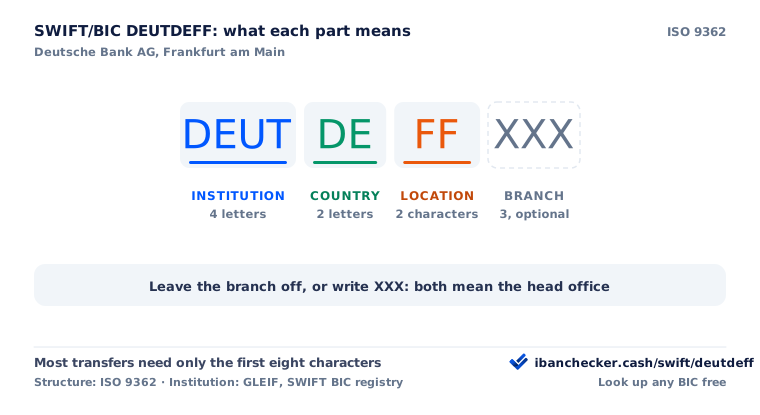
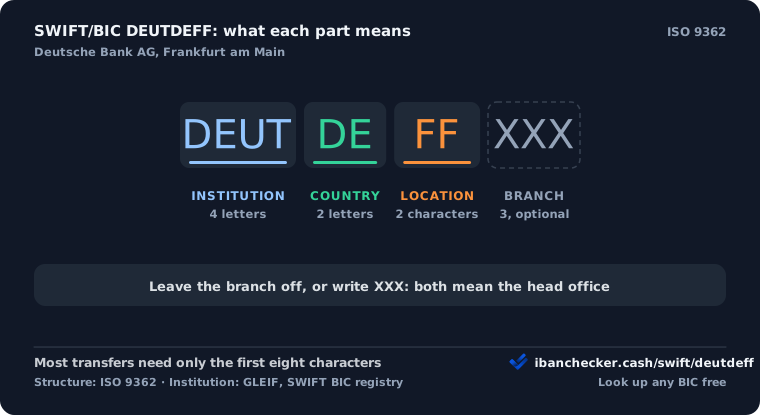
- Bank code (4 letters): Identifies the institution, e.g. DEUT for Deutsche Bank, BNPA for BNP Paribas
- Country code (2 letters): ISO 3166-1 alpha-2 country code, e.g. DE for Germany, FR for France
- Location code (2 alphanumeric):Identifies the city or region; if the second character is "1", the bank is a passive SWIFT participant
- Branch code (3 alphanumeric, optional):Identifies the branch; "XXX" always means the primary office
SWIFT Code vs BIC: Is There a Difference?
No. SWIFT code and BIC refer to the same thing. "SWIFT code" is the informal term used by customers and banks in everyday language. "BIC" is the formal ISO 9362 term used in regulatory and technical contexts. Both follow the same 8 or 11 character format, which is why this page checks either one.
When Do You Need a SWIFT Code?
- International wire transfers (SWIFT/IBAN payments)
- SEPA Credit Transfers to banks outside your home country
- Receiving payments from abroad
- Setting up payroll for employees in other countries
For most SEPA payments within the eurozone, the SWIFT code is no longer mandatory. The IBAN alone is sufficient. However, non-SEPA international transfers and many fintech platforms still require a valid SWIFT code.
What This Checker Cannot Tell You
A well-formed SWIFT code is not proof that a payment will arrive. This page checks the ISO 9362 structure and, where we hold the record, names the institution. It cannot confirm that the receiving account exists, that it is open, or that the account holder name matches the beneficiary you intend to pay. To browse institutions rather than check one code, use the SWIFT/BIC directory.
Last updated: August 2026